
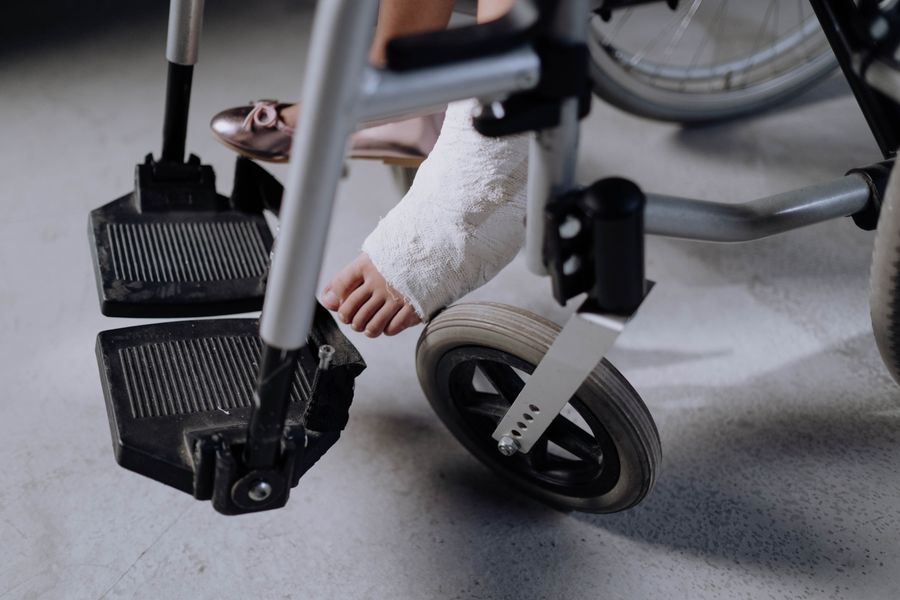
Every day, millions of children head off to school, and parents naturally expect them to return home safely. The sudden shift from a normal school day to a medical emergency is overwhelming for any family. Unfortunately, serious accidents happen more frequently than many families realize, and the consequences can be life-altering. A comprehensive report from the Centers for Disease Control and Prevention reveals that an annual average of 21,101 children aged 14 and under are treated in emergency departments for nonfatal playground-related traumatic brain injuries, with nearly a third of these injuries occurring at school. When a child is hurt during school hours, parents are often left facing a confusing maze of liability rules, medical bills, and institutional protections. Knowing your legal rights is essential for protecting your child.
Understanding a School’s Duty of Care
Educators, coaches, and school administrators operate under a specific legal standard known as in loco parentis. This Latin term translates to ‘in the place of a parent.’ Under this legal obligation, school staff members are bound to provide the same level of supervision, care, and protective action that a reasonably prudent parent would provide in a similar situation. If a school fails to meet this baseline standard of care, they may be held liable for any resulting harm to a student.
However, holding an educational institution accountable is rarely a straightforward process. Parents must gather compelling evidence to establish a clear breach of duty. Whether the incident involves inadequate supervision during a busy recess period or unsafe premises in the cafeteria, consulting a dedicated school injury lawyer can help families determine if negligence truly played a role in the accident.
Navigating Public School Liability and Sovereign Immunity
If a child attends a public school, parents face unique legal hurdles that typically do not exist in standard civil lawsuits against private entities. Because public schools are considered government entities, they are protected by a complex legal doctrine called sovereign immunity. This concept dictates that the government cannot be sued without its own consent, meaning public schools can generally only be sued if a specific state Tort Claims Act provides a liability exception.
To successfully win a lawsuit against a public school district, many jurisdictions require parents to prove gross negligence rather than simple carelessness. This means demonstrating that school employees exhibited a reckless disregard for student safety. Given these high legal thresholds, reviewing the foundational elements of personal injury claims is often a critical step for parents trying to navigate sovereign immunity laws and secure fair compensation for their child’s recovery.
Taking legal action against a public school also involves incredibly strict timelines. Unlike typical cases against private citizens or corporations that might offer a multi-year statute of limitations, suing a public school usually requires filing a formal Notice of Claim within a tight window. This window can range from 60 to 180 days following the incident, depending on local and state laws. Missing this strict deadline can permanently bar a family from seeking justice in a court of law, completely dismissing their right to financial recovery.
Identifying Common Hazards and Assumption of Risk
School injuries happen in various settings, but certain environments present significantly higher risks for children. When investigating a school-related incident, legal professionals typically look at a few key areas where safety protocols most frequently lapse:
- Playgrounds: Accident statistics repeatedly identify climbing equipment, monkey bars, and swings as the most statistically dangerous playground features for severe falls and fractures.
- Athletic Fields: Data shows that approximately 3.5 million children are injured annually while playing sports. Interestingly, about 62 percent of organized youth sports injuries actually occur during practice sessions rather than live games. High school studies consistently identify boys’ football, girls’ soccer, and boys’ wrestling as the sports with the highest injury rates.
- Transportation Zones: Historical statistics reveal that about 20 percent of fatalities in school transportation incidents are actually non-occupant pedestrians or bicyclists struck during peak loading and unloading hours.
When it comes to school sports, courts frequently apply the implied assumption of risk defense to lawsuits. This prevents parents from suing for routine harms that are inherent to a game. For instance, a sprained ankle during a competitive soccer match is often viewed as a foreseeable risk of the sport. However, liability may still exist if a coach forces a child to play despite a known hazard, such as an unhealed concussion or extreme heat conditions, bypassing safety protocols.
Discovering that your child has been injured at school is a distressing and chaotic experience. By understanding the strict deadlines, specialized liability protections, and expected standards of care that apply to educational institutions, parents can take the necessary legal steps to protect their family. Knowing your rights empowers you to confidently advocate for your child’s long-term health and well-being.
