
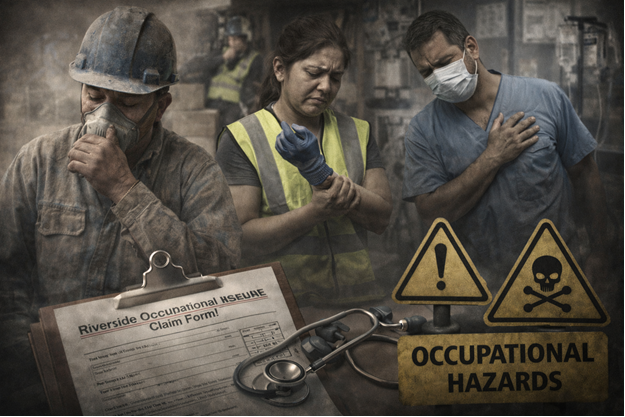
Every day in Riverside, thousands of people clock in to jobs that promise paychecks and stability. What most workers don’t realize is that many of these jobs also carry hidden health risks that can ruin lives long before retirement arrives. Beyond the obvious dangers like falls and machinery accidents lurk silent threats that chip away at health over time.
This is especially true in Riverside County’s industrial zones, warehousing hubs, healthcare facilities, and construction sites where exposure to toxins, repetitive strain, and infectious agents is common, often leading to claims involving worker’s compensation. What follows is a look at the real cost of ignored workplace health hazards and what local employees can do about them.
The Cost You Don’t See: Occupational Disease by the Numbers
Workplace injury stats often focus on broken bones and slips. But illnesses that develop slowly due to repeated exposure or harmful environments are equally devastating.
- Respiratory conditions, like work-related asthma, are a persistent problem for many laborers who handle dust, chemicals, and irritants.
- Repetitive stress disorders such as carpal tunnel and tendonitis show up frequently in assembly line or desk work.
- Skin conditions develop from prolonged contact with harsh substances used in cleaning, repair, or manufacturing.
Public health surveillance has also highlighted a concerning uptick in diseases such as valley fever in construction workers exposed to dusty soils a fungal infection that mimics pneumonia and can become chronic if untreated. Locals report seasonal spikes in cases tied to heavy earthwork and excavation projects.
These aren’t rare anomalies. Chronic occupational diseases contribute to thousands of lost workdays and long-term health costs that ripple through families and communities.
Where Riverside Workers Are at Risk
Certain environments in Riverside are known for higher occupational disease rates:
- Construction and Outdoor Labor
Dust, silica, and other respiratory irritants are everywhere on building sites. Without proper protective gear, workers often inhale harmful particles day after day.
- Warehouses and Manufacturing
Repetitive lifting, awkward postures, and contact with chemical solvents make these jobs fertile ground for both musculoskeletal injury and exposure-related illness.
- Healthcare and Service Sectors
Medical staff and service workers face biological hazards and stress injuries tied to heavy lifting, infectious disease exposure, and long shifts.
- Industrial Plants
Chemical byproducts, noise, and heat stress in industrial settings are known contributors to chronic health problems.
The Human Impact: Stories Behind the Stats
Consider Maria, a long-time warehouse worker who ignored early tingling in her hands because “it’s just part of the job.” Months later she was diagnosed with a repetitive stain injury that threatens her livelihood.
Then there’s Carlos, a landscaper who started having persistent coughing after months of trench work. Initial doctors thought it was seasonal allergies. Only after repeated episodes was a work-related respiratory issue diagnosed.
These are not outliers. They’re everyday Riverside workers suddenly faced with medical bills, lost wages, and life changes because something at work slowly went wrong.
What Employees Can Do: Practical Steps Today
Facing an occupational illness doesn’t have to be confusing or helpless. Here’s a street-smart checklist:
- Know Your Workplace Hazards
Ask supervisors for hazard data sheets on chemicals you handle. If you don’t see protective gear, demand it.
- Get Checked Early
Regular medical checkups make it easier to connect health issues to your job especially if symptoms start mild.
- Document Everything
Record dates, symptoms, incidents, equipment used, and conversations with managers. Photos and notes help build a stronger case.
- Use Workers’ Compensation Wisely
If you develop an occupational disease, you may be entitled to medical costs, wage benefits, and more under state workers’ comp.
When the system gets confusing, experienced legal help can make a difference. Riverside Occupational Disease Lawyers like those at Ochoa & Calderon have deep experience helping clients navigate workers’ compensation claims tied to long-term health issues, ensuring that medical treatment and benefits are properly pursued.
Employer Responsibility and Prevention
Employers shouldn’t treat safety as a checkbox. Investing in proper ventilation, regular training, and effective personal protection can prevent most work-related illnesses before they start.
Workers have rights, and knowing them means standing up early not waiting until illness becomes unmanageable.