
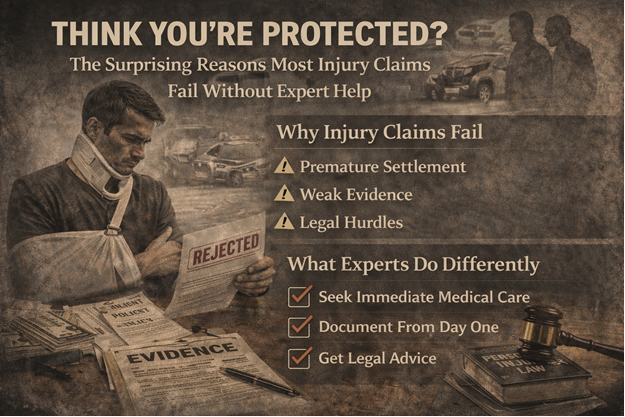
When accidents happen, many people assume that simply filing an insurance claim will put things right. That’s far from the truth. Too often, injured individuals find themselves frustrated, underpaid, or even denied compensation because they didn’t understand the hidden traps in injury claims. Knowing where claims go wrong and how to avoid those pitfalls can make all the difference when your health, finances, and future are on the line.
Why So Many Claims Fall Short
Statistics show that insurers settle a large portion of personal injury claims for less than they are worth. Research from industry analysts indicates that up to 60 percent of claimants accept settlements that fail to cover future medical care and lost wages. That happens for several reasons:
- Premature Settlement Offers
Insurance adjusters often offer quick payouts within days of the accident. They hope victims will jump at the first amount offered before they fully understand the long-term impact of their injuries.
- Incomplete Evidence
A claim without strong documentation is easy to challenge. Photos taken weeks after an accident, vague medical records, or missing witness statements give defendants an opportunity to minimize your claim or deny liability altogether.
- Misunderstanding Legal Standards
Different types of cases require different proof. For instance, a slip and fall claim at a grocery store requires showing that the store had a duty to keep the floor safe, breached this duty, and that breach directly caused the injury and damages. Without understanding how negligence is established legally, people struggle to build strong claims.
Real Examples That Show How Things Can Go Wrong
Late Medical Treatment
Consider a construction worker who slips on an unfinished floor. He doesn’t see a doctor for two weeks because pain initially seems mild. When he finally seeks care, there’s no medical record linking the injury to the accident date. The insurance company uses that gap to argue the injury happened elsewhere, reducing compensation drastically.
Incomplete Witness Accounts
In another case, a driver is hit in an intersection. She assumes her statement to police is enough but never collects contact details from onlookers. Weeks later, when the other driver disputes fault, no one can corroborate her view of the crash. With no third-party testimony, her claim stalls.
These situations are not rare. They show why early action and smart documentation matter so much.
What Smart Claimants Do Differently
Here are actionable steps that experienced claimants and lawyers recommend:
Seek Immediate Medical Attention
Even if injuries feel minor, getting examined right away creates an official record. Many serious conditions don’t show immediate symptoms, but insurers rely on treatment records to support your damages claim and establish causation.
Document Everything From the Start
Take clear, timestamped photos of injuries, the scene, vehicles, hazards, and any visible hazards. Save all medical bills, repair estimates, receipts for lost wages, and correspondence from insurers.
Preserve Evidence Early
Identify witnesses at the scene and secure their contact details before memories fade. In some cases, surveillance footage from nearby businesses or traffic cameras can make or break a case.
The Role of Expert Legal Help
Data shows that claimants represented by experienced attorneys typically recover significantly higher compensation than those who handle claims on their own. Experts know how to navigate legal standards, anticipate defense tactics, and push back when insurers use common strategies to undervalue claims.
If you’re unsure how to proceed after an accident, seeking guidance early protects both your rights and your claim. For residents of New York’s Long Island and nearby counties facing complex injury cases, a Nassau Personal Injury Lawyer can step in to handle negotiations, preserve crucial deadlines, and ensure documentation is thorough.
Don’t Let Time Work Against You
Many injury claims are governed by strict time limits. Filing too late can bar you from any compensation, regardless of how valid your claim may be. Knowing applicable deadlines and acting promptly preserves your chance for a fair outcome.
Final Thought
Injury claims are not simple forms you fill and forget. They involve evidence, timing, strategy, and often fierce push-back from insurers who profit by settling for less. Protecting your future means understanding these common pitfalls and taking smart steps from the very start. When you do that, you’re far more likely to walk away with the compensation you truly need and deserve.