
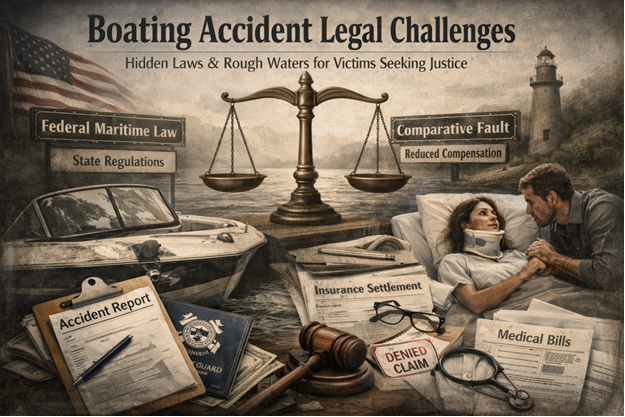
Boating on serene lakes or cruising along coastal waters embody the spirit of freedom and adventure. But when that perfect day turns into a nightmare, victims and their families often discover that the legal waters following a boating accident are far more complicated than the physical ones they just navigated.
While most of us associate boating with fun and relaxation, the legal aftermath of a crash can be murky, stressful, and full of challenges that many people never anticipate.
Why Boating Accident Claims Are So Complex
Unlike car crashes, boating accidents are governed by a mix of federal maritime regulations and state laws. These rules have a broad scope and applications, covering everything from strict safety requirements and age based operator rules to mandatory reporting to wildlife or fisheries departments. When someone fails to follow these rules, determining liability becomes a technical legal puzzle, not just a matter of who was at fault on the water.
Here’s the problem:
- Federal maritime law can override state protections, meaning victims must meet a different set of standards to pursue compensation.
- Comparative fault rules in many states reduce damages if victims are found partly responsible, even when injuries were severe.
These hidden legal layers often leave injured boaters and families struggling to understand just how their rights are affected.
The Real Cost of Boating Crashes
Boating accidents might be less frequent than car accidents, but they can be far more devastating. According to the US Coast Guard, in many boating mishaps, operator error and lack of proper training are contributing factors, and a large percentage of fatalities occur when safety courses weren’t completed.
Victims can face:
- Lost wages due to extended recovery or disability
- Hospital and emergency care costs
- Long-term rehabilitation expenses
- Emotional trauma and mental health challenges
- Damage to property, vessels, and personal gear
These losses can pile up faster than you might expect, leaving families in financial limbo while they also deal with physical and emotional trauma.
What Laws Often Overlook
One of the biggest hidden gaps is injured victims not fully understanding reporting and evidence rules. For example:
- Accident reports to authorities must capture accurate details about conditions, operator conduct, and witnesses. Missed or inaccurate reporting can weaken a claim.
- Insurance companies often seize early opportunities to protect their interests, pushing victims into unfavorable deals before they realize the full extent of their losses.
This leaves boat crash survivors in a tough spot — medically injured, legally unsure, and financially strained.
Real-World Example: Why Quick Action Matters
Imagine a family boating on a large bayou when another vessel hits them at high speed. One moment they’re celebrating a weekend, the next, they’re in the emergency room. In the chaos that follows, insurance adjusters might call saying they want to “help.” But subtle language in those early conversations can inadvertently weaken future claims.
Recovering clear, documented evidence such as photos, marine patrol records, injury reports, and witness accounts can make all the difference in building a strong legal case.
Street-Smart Tips After a Boating Incident
Here’s practical advice that real people can follow after a boating accident:
- Get medical help right away (even if injuries seem minor). That medical record can become one of the strongest pieces of evidence later on.
- Report the incident to proper authorities within required legal timeframes.
- Document everything you can with photos and notes about conditions, people, and actions taken.
- Avoid recorded or detailed discussions with insurance reps without legal guidance, as they can be used against you.
These steps help protect your health and preserve your rights. They also make sure that if you choose to pursue a claim, you’ll have solid documentation.
When You Might Need Extra Expertise
Boating accident laws can be tricky, especially when maritime regulations intersect with personal injury claims. If you find yourself overwhelmed or uncertain about your next steps, talking to professionals experienced in these matters can be life-changing.
For example, many victims in and around Louisiana seek skilled representation from a trusted Shreveport Boat Accident Lawyer who can help guide them through evidence collection, liability questions, and compensation strategies.
Final Thoughts
Boating should be a source of joy and freedom. But when accidents happen, hidden legal gaps can make justice feel distant. Understanding the nuances of reporting rules, liability standards, and damage recovery is critical for anyone affected.
Being well-informed and taking smart steps early can make all the difference between a drawn-out battle and getting the fair outcome you deserve.