
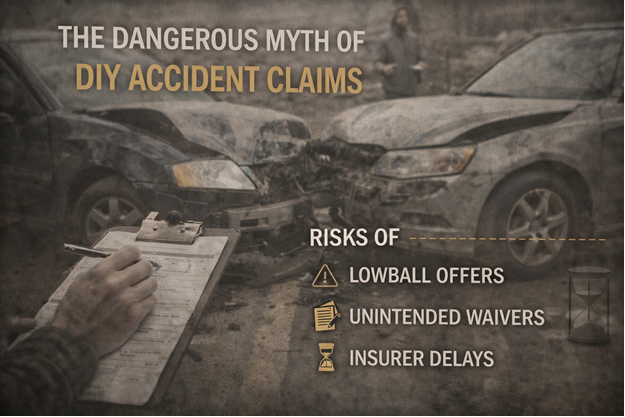
Every day, thousands of people involved in car crashes or other injuries face a moment of decision: should they try to handle the insurance claim themselves or seek professional legal help? On paper, tackling a claim alone might seem simple. You exchange details, file forms with the insurance company, and wait for a check, right? In reality, this “do-it-yourself” mentality is one of the biggest traps that injury victims fall into, often costing them time, money, and peace of mind.
Legal professionals increasingly caution consumers about the risks of DIY claims. Here’s why that warning matters and what you need to consider.
Why DIY Claims Often Backfire
Insurance companies are for profit businesses. Their adjusters are trained to resolve claims quickly and with the lowest possible payout. This is why consulting experienced Car Accident Lawyers can make a significant difference in the outcome of your claim. Independent research shows that claimants who do not have legal representation often receive significantly less compensation than those who do. In complex cases, settlements without proper negotiation can be 30 to 50 percent below fair value.
A common real-world example involves soft tissue injuries. After a crash, a person might think their whiplash is minor and not worth a lawyer’s time. But without documented medical evidence and strategic negotiation, the insurer may offer a nominal amount that barely covers the deductible or medical co-pays.
Here’s what often happens when someone tries to do it all alone:
- Underestimating future costs: Medical bills continue, but initial offers don’t account for ongoing treatment.
- Signing away rights unintentionally: Early settlement forms can include language that prevents future claims, leaving victims stuck.
- Absence of leverage: Insurance companies may wear claimants down with delays and tactics designed to deter follow-up.
Expert Insights from Legal Practitioners
Legal experts stress that evidence, documentation, legal strategy, and law, consequences & regulations matter more than people realize. Claims are not just about proving that an accident occurred. They are about proving fault, losses, and future implications.
One attorney with extensive experience representing injured individuals points out that even seemingly simple accidents can have hidden complexities. This includes determining liability when multiple vehicles are involved, calculating ongoing medical needs, and accounting for wage loss or emotional distress. After all, an immediate payout offer might sound attractive, but it rarely reflects the full cost of an injury.
Experienced lawyers know how to read police reports, interpret medical records, and evaluate long-term impacts that can easily be overlooked by someone without legal training. For instance, internal injuries may not show symptoms for days or weeks, yet early settlement offers often anticipate only immediate, visible harm.
If you are unsure where to start, consulting a seasoned professional can make a huge difference. Firms like Dixon Injury Law, known for dedicated representation in the Florida Panhandle and a wide range of injury cases, can help evaluate your situation and advise whether pursuing legal action makes sense in your case. Finding the right support could mean securing fair compensation and avoiding costly mistakes.
Practical Steps to Protect Yourself After an Accident
Whether you plan to handle your claim alone or with professional help, the following steps are essential:
- Seek medical attention right away: Some injuries are not immediately apparent. A medical record protects your health and supports your claim.
- Document the scene: Take photos of the vehicle damage, road conditions, weather, and any injuries visible at the time.
- Collect witness information: Their statements can clarify what happened and reinforce your version of events.
- Do not provide recorded statements to insurance adjusters before consulting a professional: Even friendly-sounding questions can be used to minimize your claim.
- Keep all bills and correspondence: That includes medical bills, repair estimates, and letters from insurers.
These simple steps strengthen your claim and help ensure you are not left paying out of pocket for someone else’s negligence.
When to Bring in Professional Help
There is no one right time to involve an attorney, but some clear signals include:
- You have serious injuries or significant medical expenses.
- Liability is disputed or there are multiple parties involved.
- Insurance companies delay responses or offer low settlements.
- You are unsure about your legal rights and options.
Legal professionals bring negotiation skills and a deeper understanding of how insurers operate. They can also guide you through deadlines and legal requirements that, if missed, could permanently limit your rights.
Conclusion
Trying to resolve an accident claim on your own might seem like the cheapest option, but it often ends up costing more in the long run. With insurance companies focused on profits and backed by layers of legal strategy, consumers are at a disadvantage without informed preparation and professional insight. By documenting your case carefully, understanding common pitfalls, and knowing when to seek qualified help, you can protect your rights and improve your chances of a fair outcome.
Taking the myth of DIY claims seriously and acting with knowledge and care can make all the difference in an injury case.