
Bus travel in Reno feels safe for many residents and visitors alike. Riding a bus can be cheaper and easier than driving, and services like public transit, shuttles and charter buses keep the city moving. Yet behind the convenience lies a reality that few people talk about often enough: bus accidents do happen in Reno and they can be devastating for victims and their families.
Why Bus Crashes Still Happen in Reno
Traffic data and local reports suggest that crashes involving buses and other large vehicles still occur with surprising regularity around the Reno area. Large vehicles have bigger blind spots than cars, and intersections with heavy traffic tend to be common sites of accidents. Buses are especially vulnerable during sharp turns and when motorists fail to yield the right of way. In rollover incidents, which are more likely with tall vehicles, passengers often suffer serious injuries due to the lack of protective restraints commonly found in smaller vehicles. These risks are not just theory either—they are reflected in how emergency responders see crashes throughout Washoe County. Understanding the legal timeframes for reporting accidents and filing claims is crucial for ensuring victims can pursue compensation without unnecessary delays.
Add to that the fact that reckless driving remains a complaint among many locals who cite crowded streets, distracted drivers, and high commuter volumes during rush hours as contributors to unsafe conditions on roads where buses operate. These everyday hazards increase the chance that a routine trip can turn into something far worse.
Common Injuries in Bus Accidents
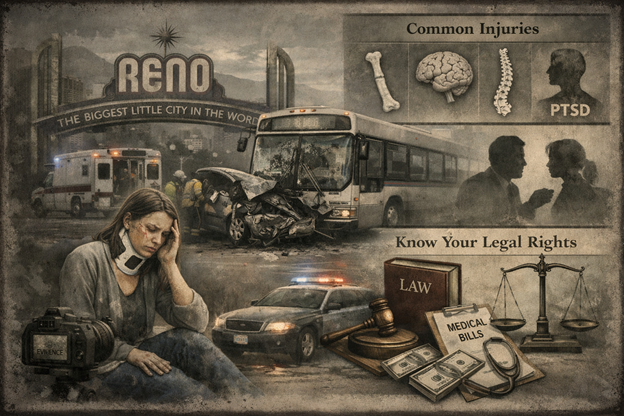
When a bus is involved in a collision, passengers and pedestrians nearby can suffer a wide range of injuries. These may include serious trauma like broken bones, spinal injuries, brain injuries, soft tissue damage, and psychological effects such as anxiety or post-traumatic stress. The lack of seat belts on most buses means even low-speed impacts can lead to significant harm.
Understanding Your Legal Rights
If you or someone you care about is hurt in a bus crash, it is important to know you don’t have to face the aftermath alone. Nevada law allows injured individuals to seek compensation for both economic and non-economic losses. Economic damages include things like medical bills, rehabilitation costs, lost wages, and future care needs. Non-economic damages compensate victims for pain and suffering, emotional distress, and loss of enjoyment of life. In some cases, punitive damages may even be available if the behavior of a responsible party was especially reckless.
Contributory negligence and Nevada’s modified comparative negligence rule mean you may still recover compensation even if you bear some responsibility for the crash, as long as your share of fault does not exceed 50 percent under state law. It’s vital to understand these standards early because they shape how claims are evaluated and resolved.
What Actions Should Crash Victims Take
- Seek Medical Attention Promptly
Your health matters first. Even if injuries seem minor at first, some symptoms appear later. A medical record not only protects you physically but also strengthens your legal claim. - Document the Scene if Possible
Photographs of the crash scene, visible injuries, and damage to property can be incredibly useful later. Get contact information from witnesses too. - Report the Crash to Authorities
Always call law enforcement to the scene. A police report makes it easier to establish what occurred and serves as an important piece of evidence in any claim. - Avoid Recorded Statements to Insurers Without Legal Guidance
Insurance adjusters may ask for statements soon after a crash. You have no obligation to give these before speaking with someone who understands how these claims work. - Know the Deadlines
Nevada generally gives injured parties two years from the date of a crash to file a personal injury claim. Cases involving government entities often have a shorter notice period. Missing deadlines can cost you your right to compensation.
When Legal Help Can Matter
A Reno Bus Accident Lawyer with local knowledge can help you navigate these deadlines, negotiate with insurers, and make sure all potential liability sources are considered. For example, bus crashes might involve corporate carriers, public transit authorities, school districts, or even negligent third-party motorists. Having someone experienced in these complexities can make a real difference in the outcome.
While no one wants to think about the worst when boarding a bus, understanding the risks, knowing the steps you should take after an accident, and being aware of your legal options can put you in a stronger position if the unexpected happens. If you find yourself facing the aftermath of a bus crash in Reno and feel unsure where to turn, experienced advocates like those at Cameron Law are prepared to help you make informed decisions about how to move forward.