
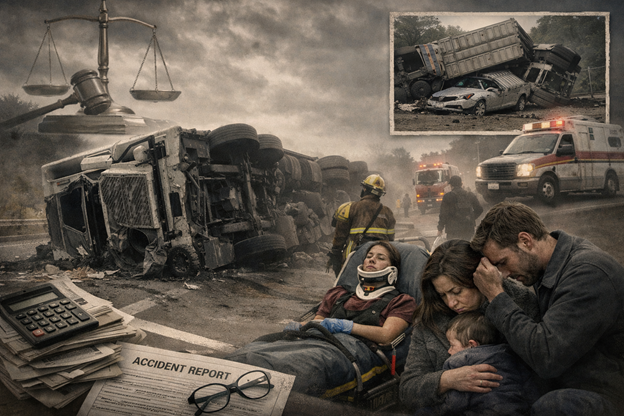
Truck crashes are more than traffic headlines. They rip through families, strain healthcare systems, drive legal battles, and expose painful truths about safety, negligence, and responsibility on our roads. When a large commercial vehicle overturns or collides with another vehicle or a pedestrian, the fallout goes far beyond metal and glass.
When Trucks Topple: Why Rollovers Are So Dangerous
Rollover truck accidents occur when a large truck flips onto its side or roof. These events are relatively infrequent but extraordinarily dangerous, and their severity has also influenced broader safety discussions, including regulatory frameworks and international agreements related to commercial transport standards. Recent safety data show that although only a small percentage of fatal large truck crashes are rollovers, the consequences are often more severe because of roof crush, ejection of occupants, and intrusion of cargo into passenger areas. Fatality rates in rollover crashes are significantly higher compared with other crash types.
Imagine a long haul driver negotiating an exit ramp on a rainy night. A heavy load shifts, the trailer tips, and within seconds the truck is sideways across the highway. The impact is immediate, brutal, and life-altering.
Hard Numbers That Tell A Story
Facts on truck crashes paint a sobering picture:
- Truck collisions are more likely to result in serious injury or death than passenger vehicle crashes.
- Pedestrians struck by trucks have a much higher mortality rate than those hit by smaller vehicles.
- Property damage averages well over a million dollars per large truck crash, compared with a fraction of that in typical car accidents.
Behind every statistic is a real person coping with trauma, medical bills, lost wages, and shattered routines.
Common Causes Behind Catastrophic Truck Crashes
Several factors often underlie these crashes:
- Driver fatigue and human error: Long hours behind the wheel can slow reaction times and lead to mistakes.
- Improper loading: Uneven or overloaded cargo can easily make a truck unstable around a corner.
- Hazardous conditions: Rain, snow, ice, and poor visibility make controlling a massive vehicle even harder.
- Speed and road design: Excessive speed, especially around curves or on ramps, increases rollover risk.
This mix of human error, mechanical challenge, and environmental risk turns a routine haul into a life-threatening moment.
Real People, Real Impact
Take the case of a suburban family heading home after Sunday dinner. A fully loaded tractor-trailer rounding a sharp corner loses control and overturns, blocking the entire road. The cars behind have only seconds to react.
The result? One family’s night ends in emergency rooms and rehabilitation facilities. Another trucker faces investigations, insurance adjusters, and a career in question.
These are not isolated snapshots. They are regular reminders that safety protocols, honest training, and strict oversight matter.
After the Crash: Steps That Can Protect You
If the unthinkable happens, here are steps every individual should know:
- Prioritize safety and medical attention immediately.
- Document the scene with photos of vehicle positions, debris, skid marks, and injuries.
- Gather witness statements before memories fade.
- Keep detailed medical records even if symptoms appear mild at first.
- Avoid volunteering information to insurance companies without advice.
- Talk to someone with legal know-how to understand rights and options.
Taking early, informed steps helps protect health and legal claims alike.
Justice, Responsibility, and Moving Forward
In the legal aftermath, multiple parties can be examined for fault: the driver, trucking company, cargo loaders, maintenance crews, and sometimes road authorities. Diligent investigation is essential to figuring out what went wrong and who should be responsible.
This is where experienced legal professionals make a meaningful difference. A New City Truck Rollover Lawyer who knows federal trucking regulations, negligence standards, and how to gather evidence can help victims seek compensation for medical costs, lost wages, pain and suffering, and long-term care.
Final Word
Truck crashes are devastating events with wide-ranging impacts on communities and individual lives. Understanding the risks, acting quickly after an incident, and knowing when to seek experienced guidance empowers families to navigate the aftermath more confidently. Every accident reminds us that safety, responsibility, and justice matter not just on the road, but in the lives of those affected.