
Home renovation projects can be exciting, but they often come with a surprising amount of legal risk. What starts as a design conversation about materials, colors, or finishes can end up in court if expectations aren’t aligned with contracts. The truth is that disputes over design choices are among the most common reasons homeowners and contractors clash. Understanding how these conflicts arise and how to avoid them is essential for anyone tackling a remodel today.
Why Renovation Disputes Happen
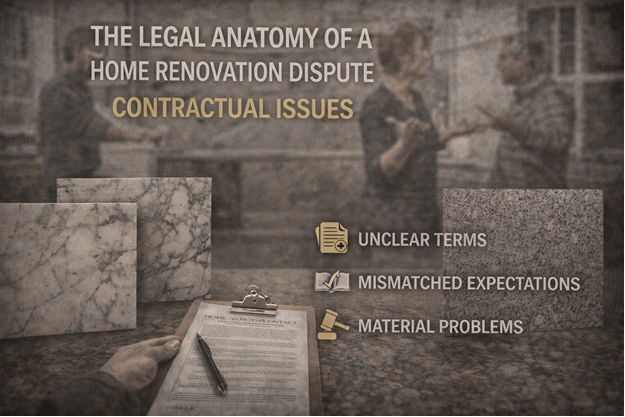
Several factors contribute to renovation disagreements, but three stand out:
- Ambiguous Contracts
Contracts that are vague or lack specifics about materials, timelines, responsibilities, and common legal issues set the stage for disagreement. Without clear definitions, one party might expect luxury materials while the other interprets a budget option as acceptable.
- Mismatched Expectations
Homeowners often fall in love with a design trend or photo and assume the contractor will deliver exactly that. But if those expectations aren’t written into the contract (with clear descriptions and acceptable tolerances), disappointment can quickly lead to conflict.
- Material Performance Surprises
Even the most careful plans can falter when materials behave differently than expected. Surfaces that stain easily, weather poorly, or fail to meet functional needs often become the focal point of disputes.
Real World Example: Quartz vs Marble Countertops
A perfect practical example of these issues centers on choosing countertop materials. Many homeowners find themselves debating between marble and engineered quartz. This choice isn’t just aesthetic — it affects durability, maintenance, and long-term satisfaction.
Marble is prized for its natural, luxurious veining and has long been featured in elegant kitchens. However, it is softer, more porous, and therefore more prone to staining and scratches if not properly sealed and maintained. Quartz, on the other hand, is an engineered surface made by combining natural quartz crystals with resins and pigments. It offers a uniform look, excellent stain resistance, and low maintenance, while still being able to mimic many marble styles. This contrast is exactly what’s at the heart of the Quartz Countertops vs Marble Guide discussions many homeowners consult when making renovation decisions.
Without clear language in the contract about which material is being supplied, how it should look, and who is responsible for handling mistakes, a homeowner expecting a marble-like finish might end up with a surface that looks more manufactured and uniform than unique. This gap between expectation and reality is a breeding ground for legal claims.
Common Legal Triggers in Material Disputes
Below are some situations that often lead to formal complaints:
- Specification mismatches: The contract calls for “marble-look countertops,” but the supplier delivers a lower grade or different variant.
- Quality vs. pricing issues: A homeowner has a premium aesthetic in mind, while the contractor includes a budget version in the quote without clarification.
- Performance claims: One party claims a material should resist certain conditions (e.g., staining or heat) when the accepted technical specs say otherwise.
For example, quartz is generally more stain-resistant than marble, but it can still be damaged by excess heat and may have visible seams in large installations. If a contract doesn’t spell out these limitations, homeowners may claim the contractor misled them — even if both acted in good faith.
Actionable Advice to Avoid Disputes
Be specific in contracts: Include brand names, sample photos, model numbers, and written tolerances.
Document changes: Any shift from agreed materials or methods should be written, signed, and added to the contract.
Use visuals: Attach reference photos to the agreement to reduce ambiguity.
Get expert help early: A consultation with a construction attorney can prevent disputes before they start.
When You Need Legal Guidance
Sometimes, despite your best efforts, disputes do escalate. In those situations, having experienced legal counsel can make all the difference. If you’re facing a renovation conflict that involves unclear contracts, unmet quality standards, disagreements about design decisions, or issues related to contract clarity, consider reaching out to Dixon Injury Attorney for insight into your rights and options.
Final Thoughts
Renovation disputes rarely happen because someone wants to fight. They usually stem from poor communication, unclear documentation, or unforeseen material behavior. By understanding how choices like countertop materials perform and by putting solid contracts in place before work begins, homeowners and contractors can significantly reduce the chances of conflict. At the end of the day, smart planning and clarity protect everyone’s interests and keep your project on track toward a satisfying finish.